This website is dedicated to the life and achievements of Internationally renowned linguist and anthropologist David L. Olmsted.
Born March 11, 1926 to George L. and Marjorie Lockwood Olmsted in Jamestown, N.Y. David Lockwood Olmsted attended the public schools of Randolph, N.Y. emerging as Valedictorian of his high school’s Class of 1942. He supported himself during high school by working for room and board on dairy farms, milking cows.
He entered Cornell University in 1942, studying Agriculture and aiming at a career in Veterinary Medicine. After a year, the Federal Government instituted a program of scholarships devoted to languages deemed important for national defense. He took the accelerated program in Russian language which was taught year-around and thus was almost ready to graduate two years later.
He volunteered for the army at the age of 17 and was called up in 1944 for basic training in Biloxi, Miss. After brief periods at army installations, he was sent to the Pacific where he served in the occupation of Japan and, as Russian interpreter, on the 38th Parallel in Korea.
While in Korea, he was Editor-in-Chief of the 7th Division newspaper, the Hourglass. Until he ignored the publicity clampdown on the major protests of the thousands of American troops left behind, as the war ended, in the Far East, he ran accounts of the protests supplied by the Associated Press and was promptly demoted from Sergeant to Private First Class, and from Editor to Infantry man.
During this time, he developed an interest in Korean folklore, later serving as the basis for his first monograph, Korean Folklore Reader. Discharged in 1946, he worked in Los Angeles as a magazine editor.
Returning to Cornell that autumn, he graduated: A.B. in Russian Language and Literature (1947), M.A. in Linguistics (1948) and Ph.D. in Slavic Linguistics, Linguistics and Anthropology (1950).
In preparation for an appointment in Linguistic Anthropology at Northwestern University, he spent the summer of 1950 on the Navajo reservation studying the language.
At Northwestern University, he was introduced to African Anthropology by Melville J. Herskovits, the great specialist in African and Afro-American peoples and cultures. A field trip to Cuba resulted from this to study Lucumi, an African language spoken there.
A Ford Foundation fellowship (1951-1954) at Yale University, where he was Assistant professor of linguistics, exposed him to Hullian psychology and the influence of Bernard Bloch, editor of Language, of the journal of the Linguistic Society of America. He was appointed to the Committee on Publication of the Journal, in effect Associate Editor, where he served for the next 14 years.
In 1954, the University of California at Davis began to expand its offerings in Letters and Science and he was brought to the campus as the first anthropologist/linguist. For the next 39 years he helped build up the anthropology department, while shifting his research emphasis to the Hokan family of languages spoken by native Americans from northern California to Southern Mexico.
Field work among the Achumawi and Atsugewi resulted in dictionaries of these 2 languages, followed by study of the related Tegustlatec of Oaxaca, Mexico.
In 1962 he went as an exchange professor to the Universities of Moscow and Leningrad, reviving his long-dormant Russian. At this time he began research on the Polish-Russian linguist Jan Baudoin de Courtenay, a pioneer of structuralism.
He first introduced a new theory of children’s acquisition of language in a lecture at Moscow State University, and later, translated into English, at the Linguistic Institute at the University of Washington, Seattle.
The next decade saw an efflorescence of research on child language development with colleagues at the Center for the Advanced Study of the Behavioral Sciences and at UC Davis. That research culminated in the publication of one of his books: Out of the Mouth of Babes: Earliest Stages in Language Learning.
Professor Olmsted was nominated for the Faculty Research Lectureship for the year 1974-1975, the highest honor that can be bestowed on a faculty member by the Davis Division of the UC Academic Senate. In his lecture, Heresy in Linguistics, he contrasts his behavioral approach to linguistics with Noam Chomsky’s metaphysical belief in innate ideas as they pertain to the nature and the acquisition of language.
An article in the Fall 1986 UC Davis Magazine, titled Ember in the Sea, outlines David Olmsted’s latest research which sent him on several field trips to the island of Corsica, to study the waning Corsican language and culture. Unfortunately, by the time he retired from UC Davis in 1993, he had not published his findings.
His scholarship (close to 90 publications) earned him many awards, including a Social Science Council Faculty Research Fellowship (1955-1958), a Guggenheim Fellowship (1961), and a Fellowship at the Center for Advanced Study in the Behavioral Sciences (1966-1967).
He was reviewer of research grant proposals for the National Science Foundation and the National Institutes of Health, and acted as a referee and consulting editor for a number of learned journals.
For the American Anthropological Association, he served on the Executive Board and, later, as Editor-in-Chief of the American Anthropologist, the principal Journal of the Association.
His record of university service was deemed “remarkable and distinguished” by the Committee which nominated him as the UC Davis Faculty Research Lecturer. He was very active in the affairs of the Davis Division, for example serving as the Chairman of the Division, and as Chairman of the Committee on Academic Personnel (both locally and of the statewide Academic Senate).
While teaching at UC Davis, he tended his herd of Suffolk sheep and planted dozens of trees in the hard clay soil of his land. During his retirement, he perfected his culinary skills (his risotto and his chili were legendary), travelled often to Europe with his wife, spoiled his cats and played his musical instruments.
David Olmsted met, in 1984, Anne Hiller (nee Marty). They were married in 1986.
_______________________________________________
David L. Olmsted died in the hospital on June 3, 2022, from pneumonia.
David L. Olmsted is survived by his daughter Elaine Olmsted Gearhart (born in 1948), his son Frederick Olmsted (born and adopted in 1968), his nephew Nicolas Boseck, son of his late sister Nancy Olmsted Slone (his only sibling). He is also survived by his wife, Anne Olmsted.
David Olmsted was calm, thoughtful, principled, and had a keen sense of humor. He had a passion for reading, for chess, for jazz and Mozart. He was a lifelong active Democrat who followed closely political events and trends.
He will be sorely missed by his family, friends and colleagues.
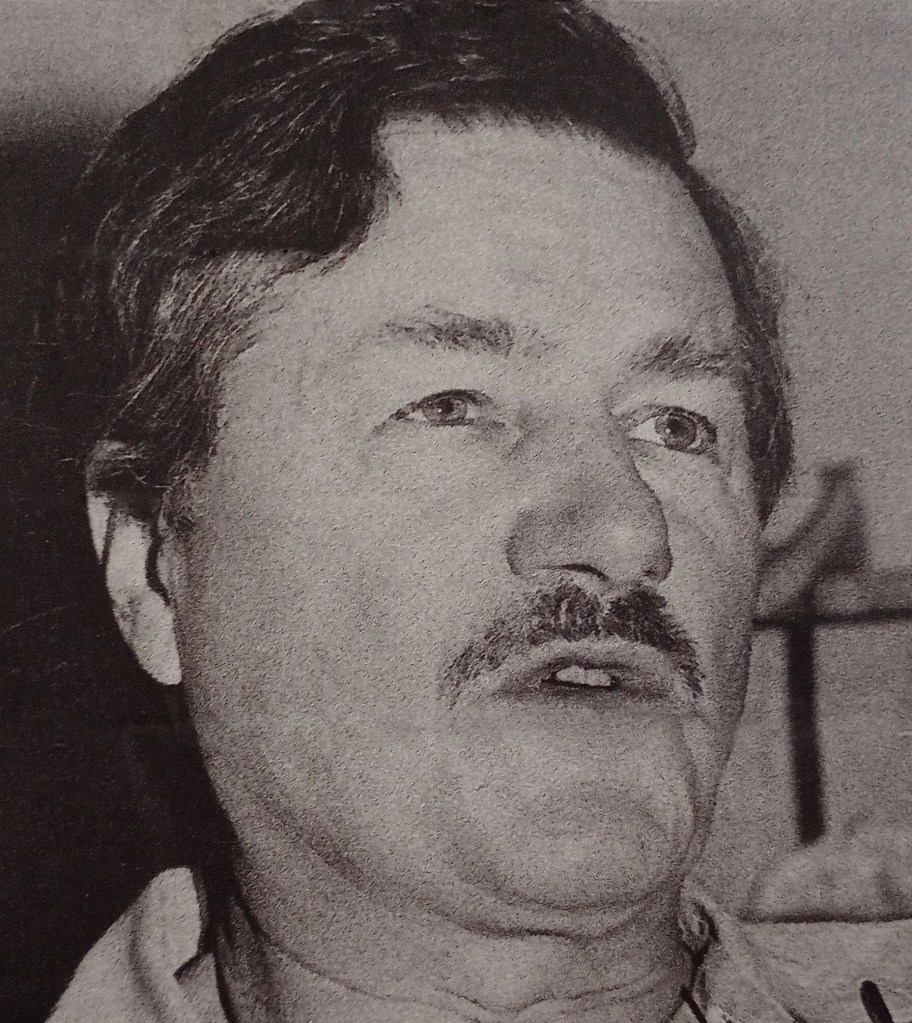
 David Lockwood Olmsted